










Nippon Quality Exterior Emulsion for Islamabad and Rawalpindi homes
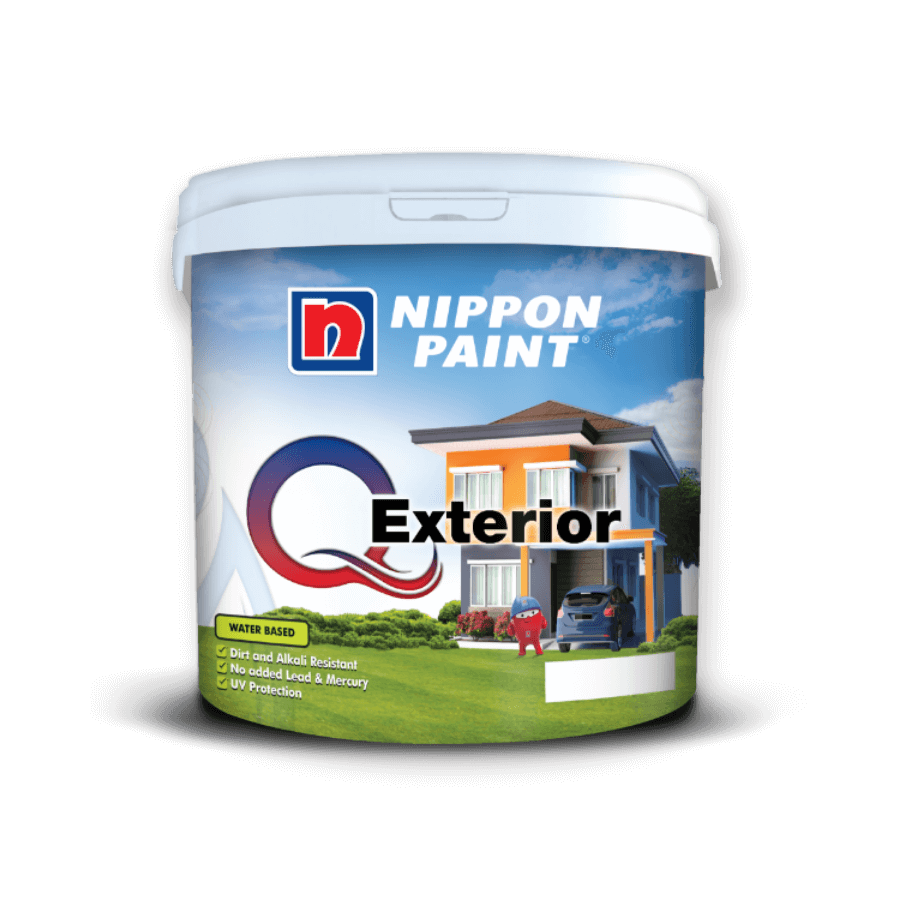
Exterior paint has to do more than add colour. It faces sun, dust, seasonal rain, changing humidity and the condition of the plaster underneath. Nippon Quality Exterior Emulsion is a pure-acrylic emulsion formulated for the protection and decoration of exterior walls. Nippon describes it as an economical exterior option with good resistance against harsh weather, dirt, flaking, alkali and UV rays. Its technical data sheet (TDS) specifies a low-sheen appearance.
For homeowners, painters, builders and property managers in Islamabad and Rawalpindi, this guide explains where the product fits, how to prepare the wall and how to interpret the manufacturer's coverage and drying figures. The key is to use the complete coating system on a dry, sound surface—not to expect an exterior emulsion to repair leaks or replace waterproofing.
What is Nippon Quality Exterior Emulsion?
Nippon's Pakistan product information identifies it as an acrylic emulsion paint specially formulated for exterior walls. The October 2025 TDS lists a pure acrylic emulsion binder, clean water as the thinner and a low-sheen appearance. Nippon describes it as a good economical choice for exterior wall protection and decoration, with resistance to harsh weather, dirt, flaking, alkali and UV rays.
The product is available in a range of shades. Check the current Nippon shade card and confirm the selected shade and pack availability with Al-Waqas Paint & Hardware before placing a large order.
Where is it suitable?
The main recommended use in Nippon's TDS is the protection and decoration of exterior walls. It can be considered for properly prepared exterior masonry such as cement-rendered walls and concrete elevations, following the specified primer or sealer system.
Nippon's TDS also gives a separate preparation route for khaprail tiles: the tiles must be clean, dry and free of dust, dirt and grease; use Nippon Hi-Bond Wall Primer or Nippon Expresskote Sealer as the primer; seal tile edges properly to reduce moisture penetration; and allow the system to dry completely before the finish coats.
Do not assume that every roof, floor, metal surface or interior wall is suitable. Follow the product's stated exterior-wall use and the substrate-specific instructions in the TDS.
Product benefits—and what not to expect
- Pure-acrylic emulsion: the manufacturer identifies a pure acrylic emulsion binder and clean water as the thinner.
- Exterior-wall formulation: Nippon lists good resistance against harsh weather, dirt, flaking, alkali and UV rays.
- Low-sheen appearance: a subdued sheen for exterior elevations rather than a high-gloss finish.
- Choice of shades: Nippon refers customers to its exterior colour card for available shades.
- Water clean-up: the TDS says to clean application equipment with water immediately after use.
There are important limits. The TDS does not describe this product as a flexible waterproofing membrane, a crack-bridging coating or a substitute for repairing roof and plumbing leaks. It also does not give a specific service-life warranty or a quantified UV-test result. Do not rely on unsupported claims such as a guaranteed number of years, a fixed percentage of UV reflection or a self-cleaning effect.
If a wall has active seepage, rising damp, failed joints, moving cracks or loose plaster, repair the cause and the substrate first. Choose a dedicated waterproofing or crack-treatment system when the job requires one.
Nippon Quality Exterior Emulsion coverage, coats and drying
The current TDS linked from Nippon Paint Pakistan's product page is revised October 2025. It lists the following guidance:
| Technical item | Manufacturer guidance | | --- | --- | | Binder | Pure acrylic emulsion | | Appearance | Low sheen | | Theoretical coverage | 14–16 m² per litre per coat | | Recommended finish coats | 3–4 | | Touch dry | 15 minutes; depends on temperature and humidity | | Hard dry | 45–60 minutes | | Recoat interval | 2–3 hours | | Brush dilution | 50–70% water by volume | | Roller dilution | 20–30% water by volume | | Conventional air-spray dilution | 30–40% water by volume | | Clean-up | Clean equipment with water immediately | | Standard packing in TDS | 1 L, 4 L and 16 L |
The coverage figure is theoretical and per coat. Nippon says actual coverage may vary with substrate conditions. Rough or porous plaster, repairs, surface absorption, application technique, colour change and material loss can all affect the quantity needed. Measure the area and inspect the wall before estimating litres; do not treat the theoretical figure as a guaranteed site yield.
The touch-dry figure depends on temperature and humidity. The 2–3 hour recoat interval is the manufacturer's guide, but cooler weather, high humidity, poor airflow or a damp substrate can slow drying. Check that the previous coat is properly dry before continuing.
Surface preparation: the step that protects the finish
Nippon's TDS gives separate guidance for bare masonry, previously painted walls and khaprail tiles. Choose the system that matches the actual substrate.
New or bare masonry
- Make sure the wall is completely dry and free from dust, dirt and grease.
- If fungus or algae is present, treat the affected area with a suitable bleach solution in accordance with the cleaner's label and the TDS. Wear gloves and eye protection, ventilate the work area and never mix bleach with acids, ammonia or other cleaners. Allow the surface to dry fully.
- Apply the specified sealer/primer. Nippon's bare-masonry instructions name Nippon Vinilex 5100 before the topcoat; its recommended masonry system also lists Nippon Vinilex 5100 Wall Sealer, Nippon FlexiSeal or Nippon Expresskote Sealer. Follow the selected primer's own TDS and confirm compatibility.
- Repair cracks and surface defects with a suitable exterior-grade filler. Nippon's previously painted-surface instructions refer to Nippon Weatherbond Exterior Putty for crack repairs where necessary.
- Allow repairs and the primer/sealer to dry completely before applying the finish.
Previously painted exterior walls
- Remove unstable paint film and loose chalk by rubbing down with abrasive paper or a wire brush.
- Dust off the surface thoroughly.
- Fill cracks where necessary with a suitable exterior filler, following the TDS guidance.
- Prime repaired and prepared areas with Nippon Vinilex 5100 Wall Sealer or Nippon FlexiSeal as specified by Nippon.
- Do not coat over peeling paint, powdery surfaces, salts or damp patches.
Khaprail tiles
The TDS requires khaprail tiles to be clean, dry and free from dust, dirt and grease. Use Nippon Hi-Bond Wall Primer or Nippon Expresskote Sealer as the primer, make sure tile edges are properly sealed to reduce moisture penetration, and allow the system to dry completely before topcoating.
Check moisture and alkalinity
Nippon's recommended painting specification requires wall moisture to be below 16%, measured with a moisture meter, and wall alkalinity to be below pH 9. Do not proceed just because the surface looks dry. If readings are high, salts are reappearing or dampness persists, investigate the source and let the wall reach the specified condition before painting.
How to apply the finish coats
- Confirm that the substrate preparation and selected primer system are complete and dry.
- Stir the paint thoroughly and prepare only the quantity needed for the working area.
- Dilute by volume within the TDS range for the chosen tool: 50–70% water for brush, 20–30% for roller or 30–40% for conventional air spray.
- Apply evenly, following the recommended 3–4 finish coats. Avoid over-thick application or extra dilution outside the stated range.
- Allow the stated 2–3 hour recoat interval as a guide, and extend the wait if temperature, humidity or surface conditions slow drying.
- Clean brushes, rollers and spray equipment with water immediately after use.
For a large elevation or a significant colour change, make a small trial area first so the applicator can assess the substrate absorption, shade and finish before proceeding across the whole wall.
Weather, moisture and safety in Islamabad and Rawalpindi
Exterior work in the Islamabad–Rawalpindi area often has to be planned around monsoon showers, morning dew, shaded walls and humid periods. Do not apply paint to rain-wet, dew-covered or visibly damp masonry. Check the forecast, choose a dry working window and protect freshly painted areas from rain until the coating has dried sufficiently. The TDS does not specify a universal rain-free number of hours, so do not invent one; use the stated drying guidance and assess actual site conditions.
Strong direct sun can make a wall heat up and can cause the surface to dry unevenly. Where practical, plan work for a more moderate part of the day and avoid coating a hot surface. In cooler or humid weather, allow more time between coats rather than relying on the shortest stated interval.
Nippon's TDS advises good ventilation during application and drying, avoiding inhalation of vapour and sanding dust, and avoiding contact with eyes and skin. Wear a suitable mask, protective clothing and eye protection. Keep paint away from children, food and drink; do not swallow it. If it enters the eyes, rinse immediately with plenty of water and seek medical advice. Clean skin splashes with soap and water. Store containers in a cool, dry place and upright during transport. Use sand to contain spills, and do not discharge paint or washings into drains or the environment.
The TDS states that the product does not contain added lead, mercury, chromium or cadmium compounds. This formulation statement does not remove the need for ventilation and safe handling.
Is Nippon Quality Exterior Emulsion right for your project?
Consider Nippon Quality Exterior Emulsion when you need a low-sheen, pure-acrylic finish for suitable exterior walls and want to follow Nippon's specified sealer and 3–4 coat system. It is an economical exterior option with manufacturer-listed resistance to harsh weather, dirt, flaking, alkali and UV rays.
Choose a different system if the job needs a flexible waterproofing membrane, crack bridging, repair of active water ingress or a performance claim that is not stated in this product's TDS. Correct the substrate problem first, then select the compatible primer and finish for the exposure.
Need Nippon Quality Exterior Emulsion in Islamabad or Rawalpindi? Contact Al-Waqas Paint & Hardware for current price, shade availability, pack sizes and advice on the correct exterior-wall preparation system.
Search keywords
Nippon Quality Exterior Emulsion price in Pakistan, Nippon Quality Exterior Emulsion Islamabad, Nippon Quality Exterior Emulsion Rawalpindi, Nippon exterior paint coverage per litre, pure acrylic exterior emulsion Pakistan, low-sheen exterior wall paint, exterior paint for cement plaster, Nippon paint for exterior walls, Nippon Vinilex 5100 exterior primer, exterior wall paint preparation, exterior paint drying time, Al-Waqas Paint & Hardware.