











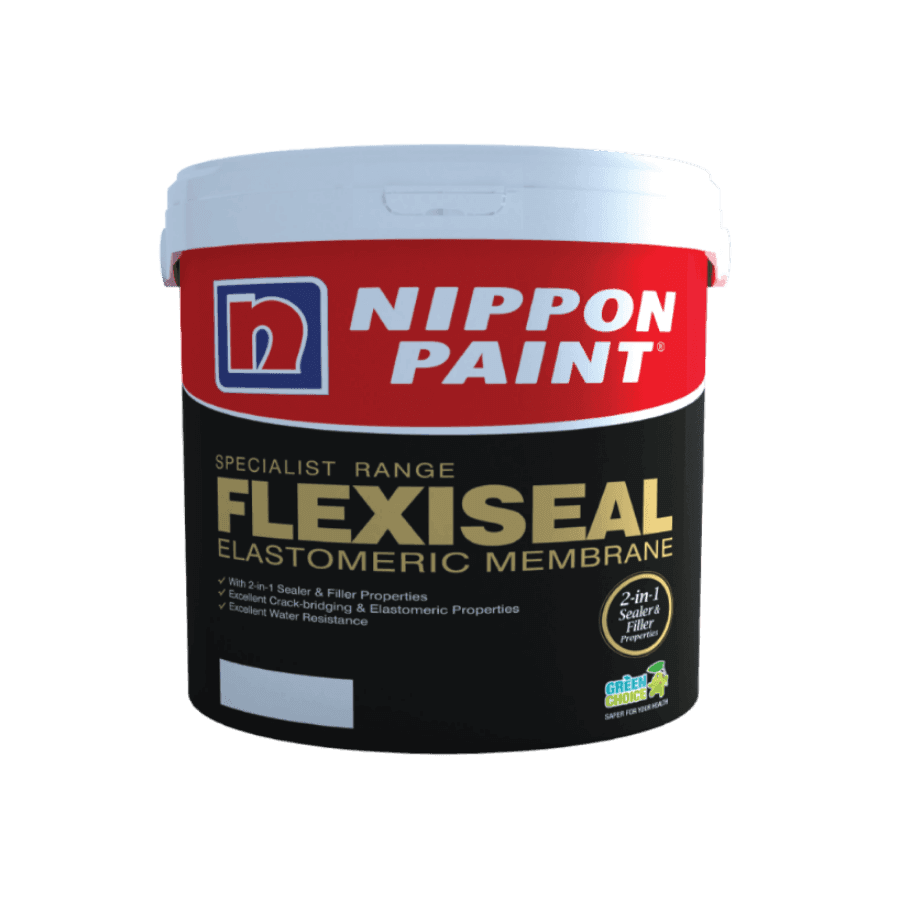
Nippon FlexiSeal Elastomeric Membrane for Roof and Wall Waterproofing
Small cracks in an exposed roof, balcony or exterior wall can become a route for rainwater to enter a building. Before the next spell of rain in Islamabad or Rawalpindi, it is worth checking the surface, identifying the source of moisture and choosing a coating system designed for the job.
Nippon FlexiSeal Elastomeric Membrane is a high-build, water-based styrene-acrylic membrane developed for exterior use. Nippon Paint Pakistan describes it as a 2-in-1 sealer and filler with flexibility to cover hairline cracks. Its technical data sheet also describes good adhesion and water resistance, including sealing pores in concrete to help prevent water penetration into the substrate.
FlexiSeal is listed for exterior walls, brickwork and wallboards, and for waterproofing masonry surfaces such as roofs, walls and balconies. It is not a substitute for repairing structural cracks, failed plumbing, defective roof drainage or movement joints.
What does Nippon FlexiSeal do?
According to Nippon Paint Pakistan's product information and the technical data sheet revised in October 2025, FlexiSeal offers:
- Hairline-crack filling: Its high-build, flexible membrane can cover hairline cracks when the surface is prepared and the product is applied as specified.
- Water resistance: The coating helps seal concrete pores and reduce water penetration through suitable masonry surfaces.
- Sealer and filler function: Nippon describes it as a 2-in-1 product for exterior surface preparation and protection.
- Adhesion: The manufacturer lists good adhesion to a properly prepared substrate.
- Exterior suitability: It is intended for exterior walls, brickwork, wallboards and masonry waterproofing applications such as roofs and balconies.
- No added lead or mercury: This is a manufacturer-listed product characteristic; always follow the pack's safety instructions during handling and application.
Where can it be used?
FlexiSeal may be considered for these exterior masonry areas when the substrate and site conditions are suitable:
Concrete roofs and roof slabs
For a masonry or concrete roof, FlexiSeal can form part of a waterproofing system. The TDS specifies a three-coat application for this use. Check the roof's drainage, outlets, parapet junctions and existing cracks before starting; coating alone will not correct ponding water or a structural defect.
Balconies and exposed ledges
Balcony floors, exposed concrete ledges and similar masonry areas can be vulnerable to rainwater. Pay particular attention to corners, edges, drain outlets and wall-to-floor junctions so the specified coating system is continuous.
Exterior walls and brickwork
On exterior walls, FlexiSeal can be used to fill hairline cracks and as an undercoat/sealer in the manufacturer's recommended system. If a decorative finish is required, follow the TDS system and apply the compatible exterior sealer and exterior-grade emulsion specified for that use.
Two different application systems: undercoat or waterproofing
The Nippon TDS distinguishes between using FlexiSeal as an undercoat/sealer and using it as a waterproofing membrane. The coat count, dilution and theoretical coverage are different. Do not mix the two sets of instructions.
1. When used as an exterior undercoat or sealer
For suitable exterior walls, brickwork and wallboards, the October 2025 TDS specifies:
- Coats: 1–2 coats of FlexiSeal.
- Application: Brush or roller.
- Dilution: The first and second coats may be diluted with 5% water as specified in the TDS. Where hairline cracks need filling, fill them first and apply a thick film without dilution as directed.
- Theoretical coverage: Approximately 8–10 m² per litre per coat at 35 microns dry-film thickness.
- Recoat interval: 2–4 hours.
- Drying: Touch dry about 1 hour; hard dry about 2 hours.
The TDS lists a compatible system after the FlexiSeal undercoat: one coat of Nippon Vinilex 5100, Vinilex 5200 or Nippon Hi-Bond Wall Sealer, followed by an exterior-grade emulsion. Confirm the exact system for the surface and chosen topcoat before purchase.
2. When used as a waterproofing membrane
For masonry waterproofing on roofs, walls and balconies, Nippon's TDS specifies:
- Coats: 3 coats.
- Application: Brush, roller or the applicator described in the TDS.
- Dilution: No dilution.
- Theoretical coverage: Approximately 4–5 m² per litre per coat at 100 microns dry-film thickness.
- Target film build: The TDS states that an average total dry film of about 300 microns is required for excellent waterproofing performance.
- Recoat interval: 2–3 hours.
- Drying: Touch dry about 45 minutes; hard dry about 2 hours.
Actual coverage depends on the condition and porosity of the substrate and the film thickness achieved. The TDS advises covering all edges and corners and recommends consulting waterproofing professionals for better results. It also advises avoiding application when rainfall is forecast during the application days.
A simple material-estimate example
For a 100 m² roof, the TDS's theoretical waterproofing coverage of 4–5 m² per litre per coat works out to roughly 20–25 litres per coat. For three coats, that is approximately 60–75 litres before allowing for surface roughness, absorption, wastage and site-specific details.
This is only a planning estimate, not a final quotation. A site inspection and the required film build can change the actual quantity.
Surface preparation before applying FlexiSeal
Good waterproofing starts with a sound, dry surface. Nippon's TDS requires the substrate to be thoroughly cleaned and dry, with dirt, grease and other foreign matter removed.
New or bare masonry and concrete
- Remove dust, dirt, grease, loose mortar, laitance and other material that could interfere with adhesion.
- Repair surface defects and allow all repairs to dry fully.
- Make sure the surface is completely dry before coating.
- Nippon's recommended specification calls for wall moisture below 16%, measured with a Protimeter, and alkalinity below pH 9.
- Check corners, parapets, outlets and joints before starting the membrane application.
Previously painted surfaces
- Remove unstable or peeling paint, loose chalk, dust and foreign matter.
- Repair defects with suitable compatible materials.
- Clean the surface and allow it to dry completely.
- Do not apply FlexiSeal over a chalky, powdery or poorly bonded coating.
If there is active seepage, rising damp, a plumbing leak or water entering through a failed joint, correct the underlying cause first. Do not simply cover a wet or unstable surface.
Practical application tips and cautions
- Follow the correct TDS system for the intended use. Undercoat application and waterproofing application have different dilution and coverage figures.
- For waterproofing, do not dilute the product; apply the specified three coats and build the required film thickness.
- Cover all edges and corners carefully. Missed junctions can compromise the continuity of a waterproofing treatment.
- Do not apply when rain is forecast during the application period. Allow each coat to reach the stated recoat interval, taking temperature and humidity into account.
- Hairline-crack filling is not the same as structural crack repair. Have wide, moving or recurring cracks assessed and repaired with a suitable system.
- Check roof falls and drainage. A membrane is not a remedy for blocked outlets, standing water caused by poor falls or structural movement.
- Keep the container closed and out of reach of children. Ensure ventilation and wear eye protection during application. In case of eye contact, rinse immediately with plenty of water and seek medical advice.
- Clean brushes, rollers and other equipment with water immediately after use.
- Confirm the current pack label and TDS before work, as product instructions and pack availability can change.
Is Nippon FlexiSeal right for your project?
If you are dealing with hairline cracks, water seepage through suitable exterior masonry or a roof/balcony that needs a specified waterproofing treatment, Nippon FlexiSeal may be worth considering. The correct choice depends on the surface, the source of moisture and whether the product is being used as an undercoat or as a three-coat waterproofing membrane.
Al-Waqas Paint & Hardware can help customers in Islamabad and Rawalpindi check product suitability, estimate material requirements and discuss the appropriate Nippon system. Share the surface type, approximate area and a few photos before finalising the quantity.
Manufacturer references
- Nippon Paint Pakistan – FlexiSeal Elastomeric Membrane
- Nippon FlexiSeal Technical Data Sheet (revised October 2025)
Search keywords
Nippon FlexiSeal price in Pakistan, Nippon FlexiSeal Islamabad, Nippon FlexiSeal Rawalpindi, Nippon waterproofing membrane Pakistan, roof waterproofing paint Islamabad, balcony waterproofing Rawalpindi, elastomeric membrane for roof, exterior wall waterproofing, Nippon FlexiSeal coverage per litre, Al-Waqas Paint & Hardware.